

It’s time for a look at another Pagan holiday! (Past time, technically, since I’m posting this a few days late…)
Since Pagan holidays are something that come up often in my fiction, I’ve decided to do a series of posts about each of them—there are eight—on or around the date they fall. Back in October, I did an article about Samhain, the ancient Pagan root of Halloween. Now, in December, it’s time for the next one: Yule.
The Wheel of the Year
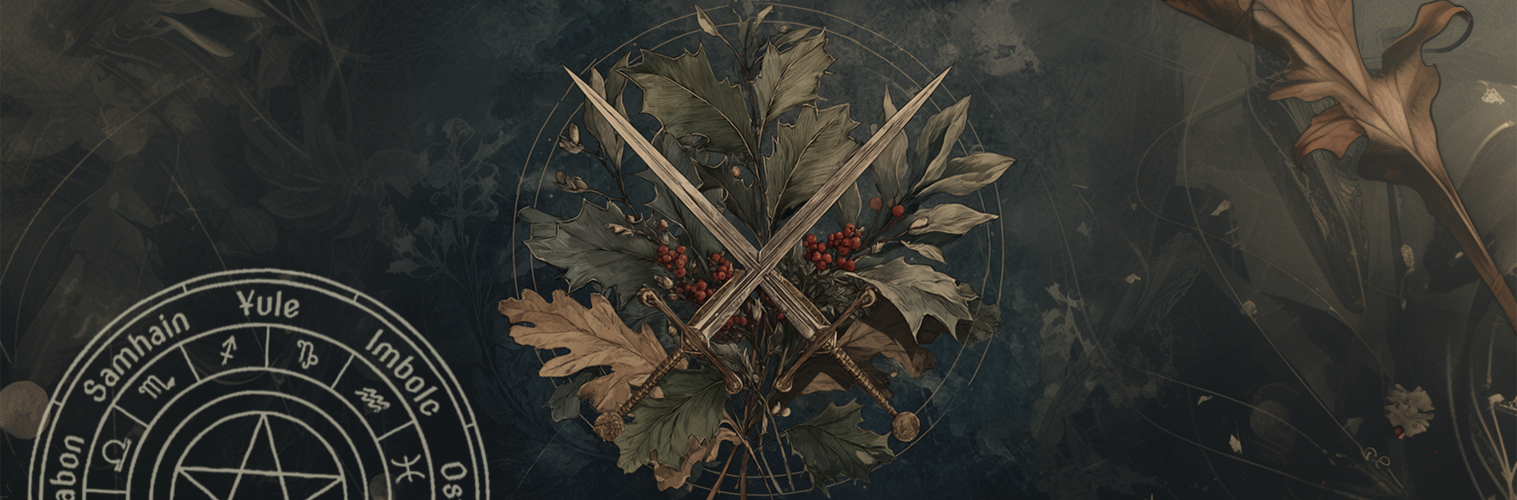
First, a quick discussion about Pagan holidays in general. Modern Pagans observe eight major holidays throughout the year, called Sabbats. They occur on the solstices and equinoxes, as well as the approximate midpoints in between. Yule is the Winter Solstice, which falls on or around December 21st (in the Northern Hemisphere, anyway. Since the seasons are reversed in the Southern Hemisphere, December 21st is the Summer Solstice there, then the Winter Solstice is on June 21st, when the Northern Hemisphere has its Summer Solstice.)
So, what exactly is a Solstice? Or an Equinox, for that matter?
The Solstices and Equinoxes are astrological events, having to do with the light of the sun and the duration of the day. The Equinoxes, which occur on or around March 21st and September 21st, are the days when the day and night are exactly equal in length: 12 hours of dark, 12 hours of light. The Solstices are the opposite of the Equinoxes, in that they’re the dates when the length of day and night are the most different. The Winter Solstice is the date when the day is the shortest and the night is the longest. The Summer Solstice is the opposite: the longest day and the shortest night.
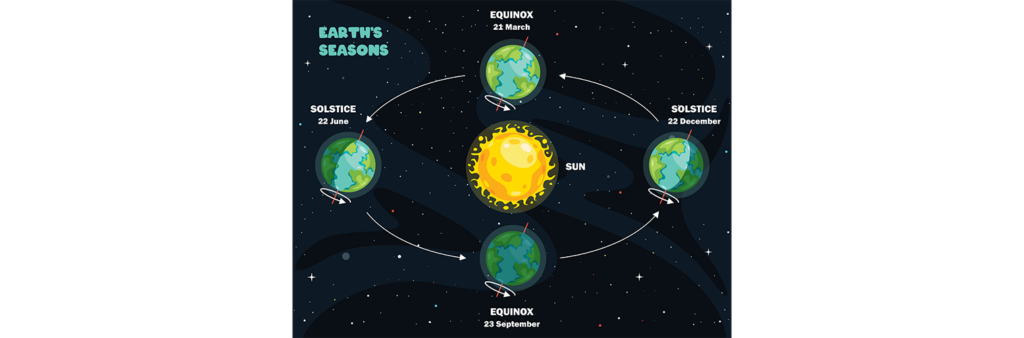
You can imagine how these events were important markers throughout the year for ancient peoples, whose lives depended on agricultural cycles, hunting seasons, and survivable weather. Today, the seasons are less imperative to survival for most of us, but observing these cycles is still a great way to stay in touch with nature and our planet.
Comparing Yule with Christmas
Most of the sabbats have a Christian or secular “sister” holiday, and Yule is no exception. Indeed, Yule might be the sabbat that’s most similar to its modern, Christian version: Christmas. Obviously, the core of Christmas, the birth of Jesus, isn’t part of Yule. A surprising amount of the rest of it is, though.
Decorating with evergreen bows, the use of holly and mistletoe, and exchanging gifts are all Yule traditions that carried over into Christmas. Even the Christmas tree originates in a Viking tradition of bringing a tree indoors and decorating it with runes. You know the “Christmas” song “Deck the Halls?” Give it another listen—it mentions “yuletide” in the lyrics, but never once mentions Christmas. That’s a yule song, folks, not a Christmas carol!
Also, while Jesus and other specific details of the Christian faith aren’t part of Yule, there are still parallels. As the last long, cold night before the days begin getting longer again, Yule also marks the symbolic rebirth of the sun.
The Oak King and The Holly King
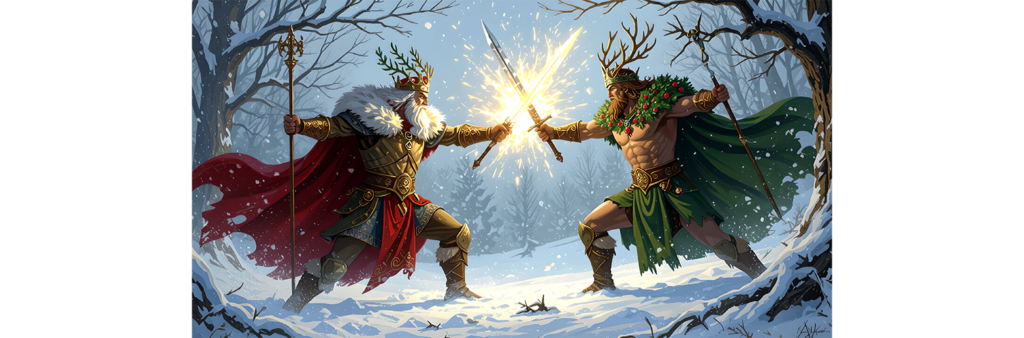
A common theme in Yule celebrations is the myth of the Oak King and the Holly King. These two “kings” are symbolic representations of the waxing and waning year. They do battle at each Solstice, the winner ruling until they meet again. At Yule, the Holly King, ruler of the waning year, loses the fight to the Oak King, ruler of the waxing year. The Oak King will lead us back to Summer, where they’ll do battle again.
If you do a web search for these two figures, you’ll notice they are often depicted—especially the Holly King—as looking a good deal like another common element of Christmas: Santa Claus.
Rebirth of the Sun
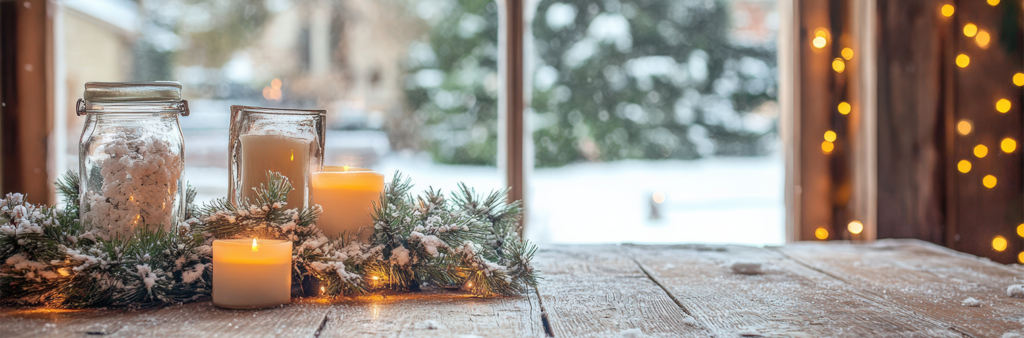
As I mentioned above, Yule is celebrated as the rebirth of the sun. It’s the longest night, but there’s hope in that. After this, the days will get longer and, eventually, warmer as spring approaches. Traditional Yule celebrations represent this by lighting candles and/or bonfires to symbolize the sun’s light and heat, by drinking warm beverages like mulled cider and wine, and by decorating homes with symbols of the sun, such as stars and shiny objects.
Even though most of us no longer rely on longer days and warmer weather for our survival, those things are still preferable to most of us. (I say most: my own little goth heart loves long nights and short days, but I’m usually the oddball in any given crowd lol!) And ultimately, though our society has evolved to be more specialized and segmented, we do still depend on agriculture for our food; a long, productive growing season really is still as important as it ever was, even if most of us aren’t directly involved in that process anymore.
So that’s Yule, in a nutshell. Come back in early February for a look at the next Sabbat on the Wheel of the Year: Imbolc. Hopefully I’ll even get that one posted on time!
Until then, as always, thanks for visiting and reading! And Blessed Yule!